
Technology is everywhere, from the navigation system in your car to the machines that manufacture everyday products. But have you ever wondered how these technologies actually solve problems? Much of the answer lies in technical applications.
Technical applications turn scientific knowledge, engineering principles, and digital tools into practical solutions. They help businesses improve operations, allow healthcare professionals to examine patients more accurately, and enable engineers to design structures before construction begins.
However, the term can be confusing because it has different meanings depending on the industry. Sometimes it refers to specialised software, while in other situations it describes the practical use of technology or engineering methods.
This guide explains what technical applications are, how they work, their main types, and where they are used in everyday life.
What Are Technical Applications?
Technical applications are practical uses of technology, scientific knowledge, engineering methods, or specialised software to perform tasks and solve specific problems.
They connect theoretical knowledge with real-world results. Instead of simply understanding how a technology works, a technical application puts that knowledge into action.
For example, an engineer may use computer-aided design (CAD) software to create a detailed model of a building. A hospital may use medical imaging equipment to examine internal organs. A manufacturing company may install sensors to detect equipment problems.
Although these examples involve different technologies, they share a common purpose: using technical capabilities to achieve a useful outcome.
What Is the Difference Between Technology and Technical Applications?
Technology refers to the tools, systems, equipment, and methods developed using scientific or technical knowledge.
Technical applications describe how those tools and methods are used to accomplish something.
Consider GPS technology. The underlying technology uses satellite signals and other information to determine location. Its technical applications include vehicle navigation, delivery tracking, surveying, and fleet management.
The distinction is simple: technology provides the capability, while its application delivers a practical use.
It’s also important to recognise that not every technical application is a mobile app or computer program. Some involve physical equipment, industrial processes, or a combination of hardware and software.
Main Types of Technical Applications
Technical applications exist across almost every major industry. Their design and complexity vary according to the problem they address.
1. Software and Information Technology Applications
Software-based technical applications help organisations manage information, automate tasks, and maintain digital systems.
Common examples include:
- Database management systems for storing and retrieving information.
- Cybersecurity tools for monitoring networks and detecting threats.
- Cloud platforms for hosting software and processing data.
- Network monitoring tools for identifying connectivity problems.
A retail company, for instance, might use inventory management software to track available products and generate alerts when stock levels fall.
These applications can reduce manual work and improve access to information, provided they are configured and maintained correctly.
2. Engineering and Design Applications
Engineers and designers use specialised technical tools to plan, test, and improve products or structures before physical production begins.
Examples include CAD software, simulation programs, structural analysis tools, and building information modelling (BIM).
An automotive engineer might simulate the behaviour of a vehicle component under different loads. This helps identify potential weaknesses before manufacturing a physical prototype.
Such applications support more informed design decisions, although computer-based predictions still require appropriate testing and validation.
3. Industrial and Manufacturing Applications
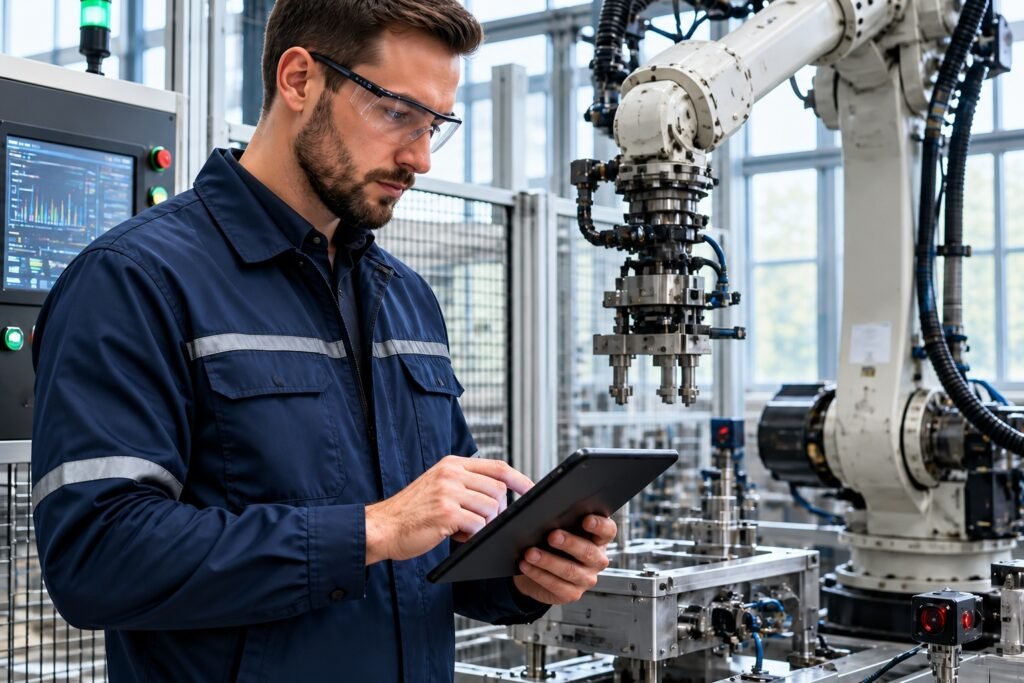
Manufacturing environments use technical applications to control machines, inspect products, and monitor production processes.
Examples include:
- Programmable logic controllers (PLCs).
- Industrial robots.
- Automated quality inspection systems.
- Temperature and pressure monitoring equipment.
Imagine a food processing plant where sensors continuously measure the temperature of storage equipment. If a reading moves outside the permitted range, the monitoring system can trigger an alert.
This allows staff to investigate the problem quickly and helps reduce the risk of damaged products.
4. Scientific and Research Applications
Scientific research depends on technical instruments and analytical methods for collecting and interpreting reliable data.
Researchers use laboratory equipment, statistical software, microscopes, and computer simulations to investigate different questions.
For example, environmental scientists may combine air-quality sensors with data analysis software to examine pollution patterns over time.
The usefulness of these applications depends on measurement accuracy, suitable methods, and careful interpretation of results.
5. Healthcare and Medical Applications
Healthcare professionals use technical applications to support diagnosis, treatment, patient monitoring, and medical research.
Examples include ultrasound imaging, magnetic resonance imaging (MRI), laboratory analysers, and digital patient-monitoring systems.
A hospital might use continuous monitoring equipment to record a patient’s heart rate and oxygen saturation. This information can help healthcare professionals recognise changes that require attention.
These systems support clinical decisions but do not remove the need for professional judgement, safety procedures, or regular equipment maintenance.
Real-World Examples of Technical Applications
Understanding technical applications becomes easier when you look at familiar situations.
| Industry | Technical application | Practical purpose |
|---|---|---|
| Construction | Building information modelling | Planning and coordinating building projects |
| Healthcare | MRI scanning | Producing detailed images of internal body structures |
| Agriculture | Soil moisture sensors | Supporting irrigation decisions |
| Transportation | GPS fleet tracking | Monitoring vehicle locations and routes |
| Manufacturing | Robotic assembly systems | Performing repetitive production tasks |
| Retail | Barcode inventory systems | Recording stock movements |
| Energy | Smart meters | Measuring and reporting energy consumption |
How Technical Applications Solve Everyday Problems
Consider a farmer who struggles to decide when crops need watering.
Without reliable measurements, irrigation decisions may depend mainly on observation or fixed schedules. This can lead to unnecessary water use or insufficient irrigation.
Installing soil moisture sensors creates a more informed process. The sensors collect measurements, and a connected system displays the information. The farmer can then use those readings alongside weather conditions and crop requirements to plan irrigation.
This is a technical application because several technologies work together to address a practical problem.
Another example is a delivery business that manages dozens of vehicles. GPS tracking software can display vehicle locations, helping dispatchers respond to delays and coordinate deliveries.
In both situations, the value comes from applying technology appropriately, not simply purchasing advanced equipment.
How Do Technical Applications Work?
Although individual systems differ, most technical applications follow a similar process.
Step 1: Identify the Problem
Every effective technical solution begins with a clearly defined need.
An organisation might want to reduce equipment downtime, improve product quality, or make information easier to access.
Without a specific objective, choosing the right technology becomes difficult.
Step 2: Select the Appropriate Technology
The next step involves comparing available tools, equipment, or methods.
Decision-makers should consider technical requirements, cost, compatibility, reliability, and available expertise.
For example, a small business may not need a complex enterprise platform when a simpler inventory system can handle its daily operations.
Step 3: Configure and Implement the Solution
The chosen technology must be installed, configured, or integrated into the existing environment.
Depending on the application, this may involve connecting sensors, setting up databases, developing software, or training employees.
Proper implementation is essential because even capable technology can perform poorly when configured incorrectly.
Step 4: Test Performance and Monitor Results
Testing helps determine whether the application achieves its intended purpose.
A manufacturing company might measure defect rates before and after introducing an automated inspection system.
If the results fall short, adjustments may be necessary. Regular monitoring, updates, and maintenance help preserve performance over time.
Benefits and Challenges of Technical Applications
Technical applications can deliver meaningful improvements, but their benefits depend on how well they match actual requirements.
Key Benefits
Improved efficiency: Automation can reduce the time employees spend performing repetitive tasks.
Greater accuracy: Properly calibrated measurement systems and validated software can reduce certain types of human error.
Better decision-making: Technical systems can provide useful information through reports, measurements, and performance indicators.
Improved safety: Monitoring equipment and automated controls can help identify dangerous operating conditions.
Long-term cost savings: Well-selected applications may reduce waste, equipment downtime, and operating expenses.
However, these outcomes are not automatic. Results depend on system quality, implementation, employee training, and ongoing maintenance.
Common Challenges
One challenge is the initial cost. Specialised equipment, licensing, installation, and training can require substantial investment.
Another difficulty is compatibility. New software or machinery may not integrate easily with existing systems.
Cybersecurity and data protection are also important, particularly when applications collect personal information or connect industrial equipment to networks.
Technical complexity can create further problems if employees lack appropriate training.
Before adopting a solution, organisations should therefore consider its total cost, maintenance requirements, security risks, and expected benefits.
How to Choose the Right Technical Application
Choosing the newest or most expensive technology does not necessarily produce the best results. A useful application should solve a specific problem without creating unnecessary complexity.
Start by identifying what you want to improve. Define a measurable objective, such as reducing processing time, improving measurement accuracy, or simplifying record management.
Next, assess your existing equipment and software. Check whether the proposed application can operate with your current systems.
Compare potential solutions using these questions:
- Does the application address the actual problem?
- Is it suitable for the expected workload?
- Can employees learn to use it effectively?
- What are the purchase, operating, and maintenance costs?
- Does it meet relevant security and safety requirements?
- Is reliable technical support available?
Where possible, test the solution on a small scale before committing to a full implementation.
For example, a warehouse could trial a barcode tracking system in one storage area before introducing it throughout the facility.
A limited trial can reveal practical problems, clarify training needs, and provide evidence about the application’s effectiveness.
The best technical application is not necessarily the most advanced one. It is the solution that meets your requirements reliably, safely, and at a reasonable cost.
Frequently Asked Questions About Technical Applications
What is a technical application in simple words?
A technical application is the practical use of technology, specialised tools, or scientific knowledge to complete a task or solve a problem. Examples include GPS navigation, medical imaging, and automated production equipment.
What are five examples of technical applications?
Five common examples are computer-aided design software, GPS tracking systems, industrial robots, medical imaging equipment, and database management systems. Each applies technology to a particular practical need.
Are technical applications the same as software applications?
No. Software applications are computer programs designed to perform specific tasks. Technical applications are a broader concept that can include software, hardware, engineering processes, scientific instruments, and specialised operating methods.
Why are technical applications important?
Technical applications help individuals and organisations perform complex tasks, use information effectively, monitor equipment, and improve processes. When implemented properly, they can support efficiency, accuracy, safety, and productivity.
Do you need programming skills to use technical applications?
Not always. Some technical applications require programming or advanced engineering knowledge, while others use straightforward interfaces. The necessary skills depend on the technology, its purpose, and the user’s responsibilities.
Conclusion
Technical applications play an important role in turning scientific and technological knowledge into practical solutions. From engineering design and healthcare equipment to industrial automation and everyday navigation, they help people complete tasks that would otherwise be more difficult or time-consuming.
The key is understanding the problem before selecting the technology. A successful application should be reliable, appropriate for its intended purpose, and supported by proper testing and maintenance.
If you’re exploring technical solutions for your work or business, begin by identifying one process that needs improvement. Then compare the available tools and consider a small trial before making a larger investment.
For a deeper understanding, explore related guides on types of software applications, industrial automation, and emerging technologies in business.