
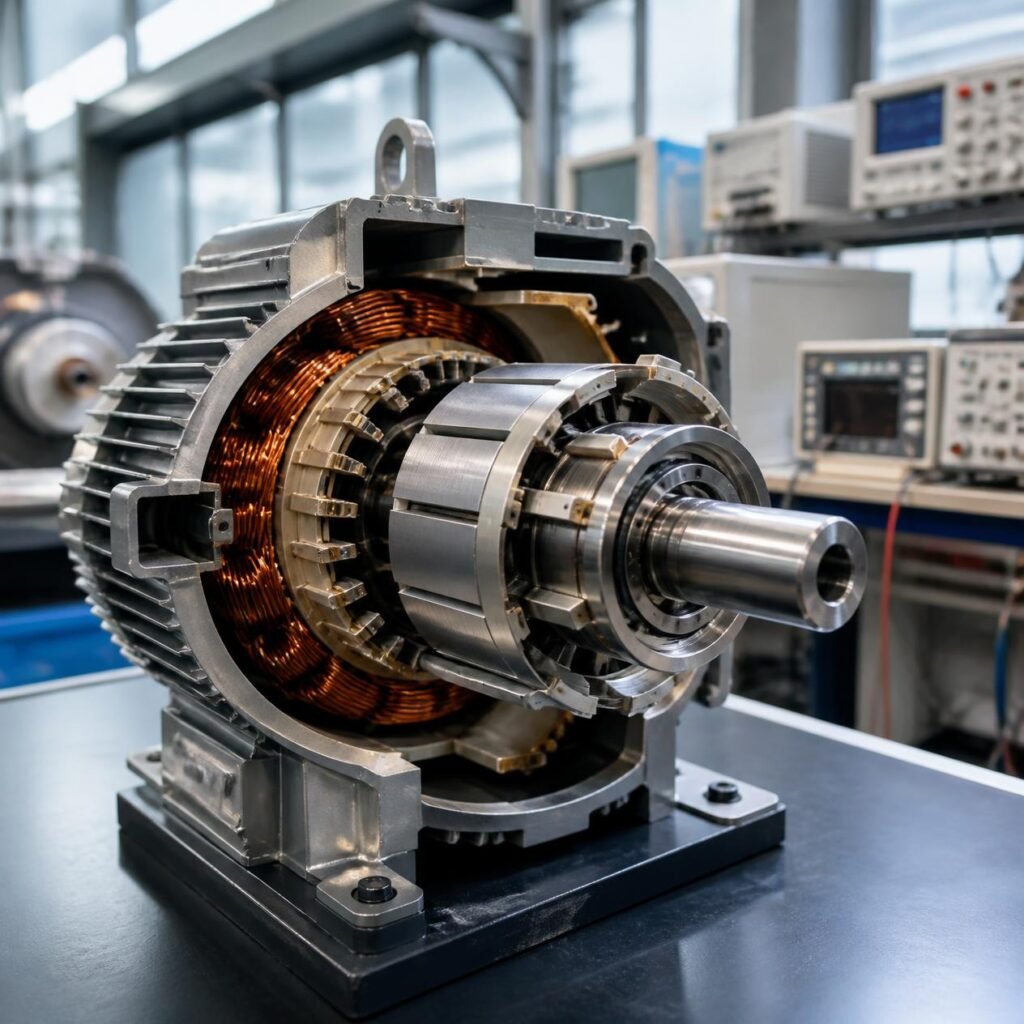
What do electric cars, MRI scanners, smartphones, and high-speed trains have in common? They all rely on magnetism in some way.
Magnetic inventions have shaped human progress for centuries. From helping sailors navigate unfamiliar seas to powering modern machines, magnets have changed how we travel, communicate, generate electricity, and understand the human body.
Yet many of these technologies work so quietly that we rarely think about the science behind them.
Some inventions use permanent magnets, while others rely on electromagnets that produce magnetic fields using electricity. Together, these technologies have made modern life more convenient, efficient, and connected.
Let’s explore 10 magnetic inventions that changed the world, how they work, who helped develop them, and why they remain important today.
What Are Magnetic Inventions?
Magnetic inventions are devices or technologies that use magnetic fields to perform useful tasks, such as producing movement, generating electricity, storing information, or creating medical images.
They generally rely on two types of magnets:
- Permanent magnets: Materials that maintain a magnetic field without requiring a continuous electrical supply.
- Electromagnets: Devices that produce magnetic fields when electric current flows through a conductor, usually a coil of wire.
The relationship between electricity and magnetism is known as electromagnetism. It explains how electric motors create movement and how generators produce electricity.
A changing magnetic field can also induce voltage in a conductor, a principle called electromagnetic induction.
These scientific discoveries became the foundation for some of history’s most influential inventions.
10 Famous Magnetic Inventions and How They Work
1. Magnetic Compass: The Invention That Transformed Navigation
Long before GPS, sailors depended on the magnetic compass to find their direction.
The magnetic compass originated in ancient China. Early magnetic direction-finding devices developed into navigation tools, which eventually spread across much of the world.
How does a magnetic compass work?
A compass contains a magnetised needle that rotates freely and aligns with Earth’s magnetic field. One end points approximately towards magnetic north, allowing users to determine other directions.
This simple mechanism transformed navigation because travellers no longer needed to rely entirely on visible landmarks or the position of celestial objects.
Why it changed the world
The magnetic compass made long-distance sea travel more reliable. It supported maritime exploration, international trade, and the development of navigation techniques.
Today, magnetic compasses remain useful for hiking, sailing, aviation, and emergency navigation.
However, a compass points towards magnetic north rather than true north. Nearby magnets, electrical equipment, and metal objects can also interfere with readings.
Despite these limitations, the compass remains one of the most significant magnetic inventions in history.
2. Electric Motor: Turning Magnetic Force Into Motion
Electric motors are responsible for powering an enormous range of everyday machines.
During the nineteenth century, scientists including Michael Faraday and Joseph Henry demonstrated how electricity and magnetism could produce mechanical movement.
Later inventors and engineers developed these discoveries into practical electric motors.
How does an electric motor work?
An electric motor converts electrical energy into mechanical energy.
It uses the interaction between magnetic fields and electric currents to produce rotational force, known as torque.
This force turns a rotor, allowing the motor to drive a connected machine.
Where are electric motors used?
- Electric cars and bicycles
- Washing machines and refrigerators
- Industrial machinery and pumps
- Electric fans and air conditioners
- Elevators and automated equipment
For example, an electric vehicle uses one or more motors to turn electrical energy stored in its battery into movement.
Electric motors also helped transform industrial manufacturing by allowing individual machines to operate using electrical power.
Their efficiency and versatility make them essential to modern transportation, manufacturing, and household technology.
3. Electric Generator: The Foundation of Modern Power Generation
Imagine living in a world where electricity could not be generated efficiently for cities, industries, and essential services.
The development of electromagnetic generators helped make modern electrical infrastructure possible.
In 1831, British scientist Michael Faraday demonstrated electromagnetic induction, a discovery that laid the foundation for electric generators.
How does an electric generator work?
A generator converts mechanical energy into electrical energy.
When the magnetic flux through a coil changes, electrical voltage is induced. In practical generators, mechanical movement produces the necessary change in magnetic flux.
The resulting electricity can be used immediately or supplied to an electrical network.
Common applications include:
- Wind turbines
- Hydroelectric power stations
- Thermal power stations
- Emergency backup generators
In a wind turbine, moving air rotates the blades, which drive a generator to produce electricity.
An important misconception is that magnets generate unlimited free energy. They do not. A generator requires mechanical energy from an external source.
The electric generator remains one of the most influential electromagnetic inventions because it supports electricity production worldwide.
4. Electromagnetic Telegraph: Making Long-Distance Communication Faster
Before electronic communication, delivering messages across large distances often required physical transportation.
The electromagnetic telegraph changed that.
Developed through the contributions of several inventors during the nineteenth century, the telegraph made it possible to send information quickly through electrical wires.
Samuel Morse became particularly well known for his work on practical telegraph systems and the code associated with them.
How did the electromagnetic telegraph work?
A telegraph operator transmitted electrical signals through a wire.
At the receiving end, an electromagnet responded to those signals by operating a mechanism that produced sounds or marks.
Operators interpreted the patterns as letters and words.
Why was it revolutionary?
The telegraph dramatically reduced communication times between distant locations.
It helped railway companies coordinate transport, enabled businesses to exchange information, and allowed newspapers to report events more quickly.
The technology also contributed to the development of communication networks.
Although modern systems use different methods, the telegraph established an important foundation for rapid electronic communication.
5. Electrical Transformer: Making Long-Distance Electricity Distribution Practical
Electrical transformers are among the most important magnetic technologies used in power systems.
Developed during the nineteenth century, transformers became essential to the expansion of alternating-current electricity networks.
Their main purpose is to increase or decrease alternating voltage through electromagnetic induction.
How does a transformer work?
A typical transformer contains two or more coils of wire linked by a magnetic core.
Alternating current passing through one coil creates a changing magnetic field.
This changing field induces voltage in another coil, allowing electrical energy to be transferred between circuits.
The relationship between the coil windings determines whether the voltage increases or decreases.
Why do transformers matter?
Transmitting electricity at high voltage helps reduce energy losses over long distances.
Transformers allow electricity networks to raise voltage for transmission and reduce it for practical use.
They are found in:
- Electricity substations
- Industrial electrical systems
- Power distribution networks
- Electronic power supplies
Without transformers, the large interconnected AC power grids used today would be much harder to operate efficiently.
6. MRI Scanner: Using Magnetism to See Inside the Human Body
Magnetic resonance imaging, commonly known as MRI, is one of the most remarkable medical applications of magnetism.
MRI allows healthcare professionals to examine internal tissues and organs without using the ionising radiation associated with X-rays.
Researchers Paul Lauterbur and Peter Mansfield made groundbreaking contributions to MRI development and received the 2003 Nobel Prize in Physiology or Medicine.
How does an MRI scanner work?
MRI scanners use powerful magnetic fields, radiofrequency pulses, and magnetic field gradients.
These interact with hydrogen nuclei inside the body, producing signals that computers process into detailed medical images.
MRI is particularly useful for examining soft tissues.
Common medical applications include:
- Brain and spinal cord examinations
- Joint and ligament injuries
- Muscle and cartilage damage
- Internal organ abnormalities
- Certain tumours and neurological conditions
For example, a doctor may recommend MRI when investigating a suspected ligament injury or examining an abnormality in the brain.
However, MRI requires appropriate safety screening because certain implants, metallic objects, and devices can create risks.
By improving non-invasive medical imaging, MRI has become an essential diagnostic tool in modern healthcare.
7. Magnetic Data Storage: Making Large-Scale Digital Storage Possible
Before solid-state drives became popular, magnetic storage was central to personal computing and business information systems.
Magnetic tape, floppy disks, and hard disk drives allowed organisations and individuals to preserve large amounts of information.
The first commercial hard disk drive was introduced by IBM in 1956 as part of its 305 RAMAC computer system.
How does magnetic storage work?
Magnetic storage devices record information by changing the magnetisation of extremely small regions on a storage medium.
A reading mechanism detects these magnetic patterns and converts them into digital information.
Examples of magnetic storage include:
- Hard disk drives (HDDs)
- Magnetic backup tapes
- Floppy disks
Although solid-state drives have become common in personal computers, magnetic hard drives remain widely used for bulk data storage.
Magnetic tape is also useful for long-term backup and archival applications.
One important advantage of magnetic storage is its ability to provide substantial storage capacity at a relatively low cost in appropriate applications.
This technology helped support the growth of computing, digital entertainment, business databases, and information services.
8. Maglev Trains: Transportation Using Magnetic Levitation
Magnetic levitation trains, commonly called maglev trains, demonstrate how magnetic forces can transform transportation.
Unlike conventional trains, maglev vehicles can move along specially designed guideways without continuous wheel-to-rail contact.
How do maglev trains work?
Maglev systems use magnetic forces to lift and guide the train.
Depending on the technology, electromagnetic attraction or repulsion maintains the required separation between the vehicle and guideway.
A propulsion system, often using a linear motor, moves the train forward.
What makes maglev technology different?
Because the train does not rely on conventional rolling contact during levitated operation, it avoids much of the mechanical friction and wear associated with train wheels.
Potential advantages include:
- High operating speeds
- Smooth transportation
- Reduced mechanical contact
- Less wear on conventional wheel-and-rail components
China’s Shanghai Maglev is a well-known example of high-speed magnetic levitation technology. Japan has also developed and tested advanced superconducting maglev systems.
However, maglev infrastructure is expensive, and high-speed trains still experience aerodynamic resistance.
Although magnetic levitation offers impressive technical possibilities, the economic practicality of each project depends on passenger demand, construction costs, and operating requirements.
9. Magnetic Speakers and Headphones: Turning Electrical Signals Into Sound
Every time you listen to music through a conventional dynamic speaker, magnetic forces help create the sound.
Many speakers and headphones use electromagnetic principles to convert electrical signals into mechanical vibrations.
How do magnetic speakers work?
A typical dynamic loudspeaker contains a permanent magnet and a moving coil attached to a diaphragm.
When an audio signal passes through the coil, it interacts with the magnetic field.
This creates force that moves the diaphragm backwards and forwards.
The diaphragm pushes against the surrounding air, producing sound waves.
Where is this technology used?
Magnetic loudspeakers appear in home audio systems, televisions, vehicle speakers, headphones, and public-address equipment.
For example, when a song plays through headphones, electrical signals cause tiny speaker diaphragms to vibrate rapidly, creating the sounds you hear.
Not all audio devices use exactly the same design, but electromagnetic speakers remain a widely used technology.
Their development made recorded music, broadcasting, and personal audio entertainment more accessible.
10. Wireless Charging: Powering Devices Through Electromagnetic Induction
Wireless charging is a modern example of how electromagnetic principles can simplify everyday technology.
Many smartphones, smartwatches, and wireless earbuds can now receive power without connecting a charging cable directly to the device.
How does wireless charging work?
Most common wireless charging systems use inductive power transfer.
A charging pad contains a coil carrying alternating current, which creates a changing magnetic field.
A compatible receiving coil inside the device captures some of this energy and converts it into electrical power.
The device’s electronics then regulate the energy used to charge the battery.
What are the advantages?
Wireless charging offers convenient device placement and reduces repeated physical connection of charging cables.
However, performance depends on several factors:
- Alignment between charging coils
- Charger and device compatibility
- Heat management
- Charging power and efficiency
Wireless charging can be less energy-efficient than a well-designed wired connection, particularly when the coils are poorly aligned.
Nevertheless, it demonstrates how an electromagnetic principle discovered in the nineteenth century continues to support modern consumer electronics.
Magnetic Inventions at a Glance
The following table compares the ten inventions, their historical development, and their role in modern technology.
| Magnetic invention | Historical development | Main application |
|---|---|---|
| Magnetic compass | Ancient China | Navigation |
| Electric motor | Early 19th century onwards | Mechanical movement |
| Electric generator | Faraday’s 1831 induction discoveries | Electricity generation |
| Electromagnetic telegraph | 19th century | Long-distance communication |
| Electrical transformer | 19th century | Voltage conversion |
| MRI scanner | Major advances in the 1970s | Medical imaging |
| Magnetic data storage | 20th century | Digital information storage |
| Maglev trains | 20th-century development | High-speed transportation |
| Magnetic speakers | Late 19th and early 20th centuries | Audio reproduction |
| Wireless charging | Modern systems based on 19th-century induction principles | Contactless power transfer |
These examples show how magnetism contributes to inventions across healthcare, transportation, energy, and computing.
How Magnetic Inventions Affect Everyday Life
Magnetic inventions are not limited to scientific laboratories or advanced industrial equipment. Many play a direct role in everyday routines.
At home, electric motors power appliances, while magnetic speakers reproduce music and television audio.
In hospitals, MRI scanners help doctors investigate medical conditions. In power networks, generators and transformers support electricity production and distribution.
Computers and data centres use magnetic storage, while wireless charging makes compatible electronics more convenient to power.
One particularly important distinction is that magnetic technology does not always require permanent magnets.
Some systems use magnetic fields created by electrical currents. Others depend on the interaction between permanent magnets, electrical conductors, and changing electromagnetic fields.
Understanding these differences helps explain why magnetism is so useful across different areas of engineering.
The Future of Magnetic Technology
Magnetic inventions continue to evolve as scientists explore improved materials, more efficient electrical systems, and new applications.
More Efficient Electric Motors
Engineers are working on motors that reduce energy losses and make better use of magnetic materials.
These developments could improve electric vehicles, industrial machinery, and renewable energy equipment.
Research into alternative motor designs may also help reduce dependence on expensive or supply-constrained magnetic materials.
Advances in Medical Imaging
Researchers are developing MRI technologies that improve accessibility, scanning techniques, and image quality.
Portable and lower-field MRI systems could make certain medical imaging services available in settings where conventional scanners are difficult to install.
However, their clinical usefulness depends on the specific examination and the performance of the equipment.
Magnetic Levitation and Transportation
Maglev technology continues to attract research interest because of its potential for high-speed movement and reduced mechanical contact.
Future development will depend on engineering improvements as well as practical factors such as infrastructure costs and energy consumption.
Improved Data Storage
Magnetic storage research continues to focus on increasing information density and improving reliability.
These developments may help meet growing demand for data storage in computing, research, and large-scale information systems.
Rather than replacing existing technology overnight, future magnetic inventions are likely to build on well-established electromagnetic principles.
Frequently Asked Questions About Magnetic Inventions
What are the most important magnetic inventions?
The magnetic compass, electric motor, generator, transformer, MRI scanner, and magnetic data storage are among the most important magnetic inventions. They transformed navigation, electricity, healthcare, and digital technology.
Who invented the first magnetic invention?
There is no single known inventor of magnetic technology. Early magnetic compasses developed in ancient China, while modern electromagnetic inventions emerged through the work of scientists and engineers over several centuries.
What are five everyday inventions that use magnets?
Five common examples are electric fans, refrigerator motors, loudspeakers, hard disk drives, and wireless chargers. These devices use permanent magnets, electromagnets, or electromagnetic induction to perform different functions.
Can magnets generate electricity without fuel?
Magnets can help generators produce electricity through electromagnetic induction, but they cannot generate unlimited energy independently. A generator needs an external source of mechanical energy, such as wind, flowing water, or an engine.
What are the latest applications of magnetic technology?
Important areas of development include efficient electric motors, advanced MRI equipment, higher-capacity magnetic storage, magnetic levitation systems, and improved wireless power transfer. Researchers continue to explore ways to make these technologies more practical and efficient.
Conclusion
Magnetic inventions have played a major role in shaping the modern world.
From the compass that transformed navigation to the electric motor that powers countless machines, magnetism has provided practical solutions to important human challenges.
Generators, transformers, MRI scanners, and magnetic storage systems demonstrate how electromagnetic principles support electricity, healthcare, and digital technology.
Meanwhile, maglev trains and wireless charging show how these same scientific ideas continue to inspire innovation.
As engineering advances, magnetic technology will remain important in developing more efficient machines, improved medical equipment, and modern transportation systems.
Want to explore the science behind these inventions? Read our related guide on how magnets and electromagnets work to understand the principles powering everyday technology.