
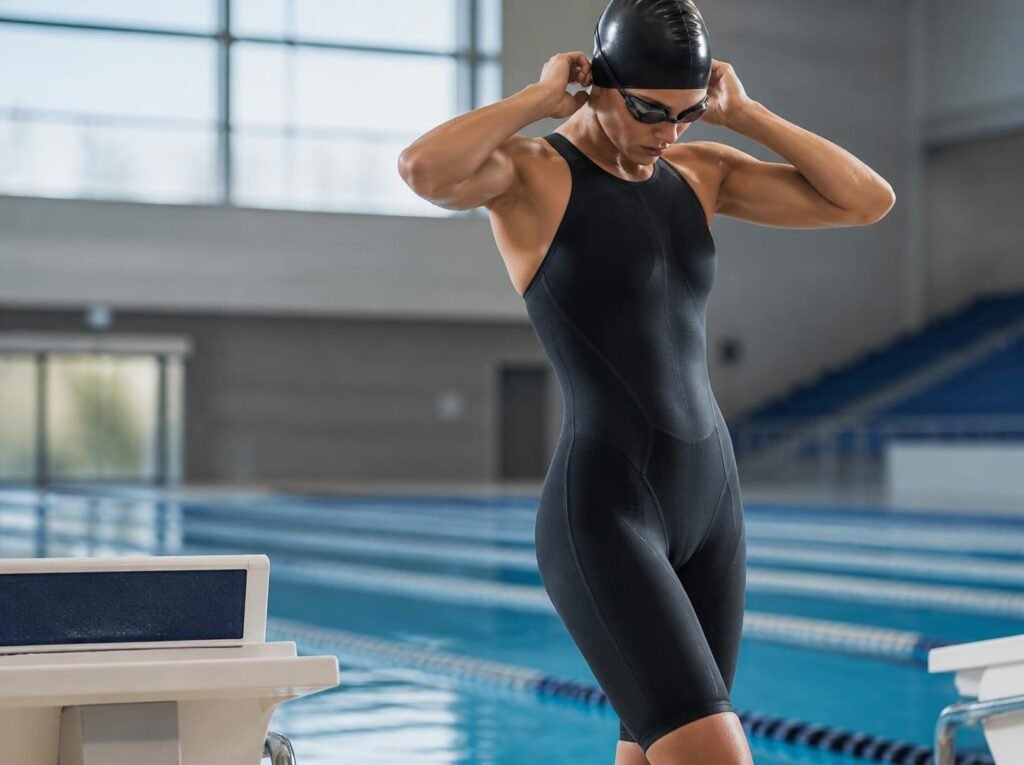
Quick answer: Tech suits offer measurable benefits mainly for competitive swimmers racing at a high level, where fractions of a second matter. For the average swimmer, the drag reduction and compression benefits exist, but they’re often too small to notice without elite-level technique and training volume. Most recreational swimmers get better results investing in coaching, technique drills, and consistent practice instead.
Walk into any competitive swim meet these days, and you’ll spot them immediately: swimmers climbing out of their warm-up gear and wriggling into skin-tight, shiny suits that look like something out of a sci-fi movie. Tech suits have become a fixture of competitive swimming, promising sleeker, faster swims through advanced materials and construction.
But here’s the real question swimmers everywhere are asking: does a tech suit actually make you faster, or is it just hype wrapped in expensive fabric? These suits can cost anywhere from $200 to $600, which is a serious investment for something you might only wear a handful of times before it wears out.
This post breaks down what tech suits are, what the science says about their benefits, and—most importantly—whether the average swimmer should actually spend their hard-earned cash on one. Spoiler: the answer depends heavily on your goals, your training, and where you are in your swimming journey.
What Are Tech Suits?
Tech suits are performance swimsuits engineered from specialized materials like polyurethane and elastane blends, designed to compress muscles, reduce drag, and improve buoyancy. Unlike traditional swimwear, which is typically made from nylon or standard spandex blends, tech suits use denser, more structured fabrics that fit like a second skin.
How Do Tech Suits Differ From Regular Swimsuits?
Traditional swimsuits prioritize comfort and flexibility for everyday training. Tech suits sacrifice some of that comfort in favor of performance. They’re tighter, more restrictive, and often take several minutes (and a bit of a struggle!) to put on correctly. Many tech suits also feature bonded seams instead of stitched ones, which further reduces drag in the water.
How Much Do Tech Suits Cost Compared to Standard Suits?
A quality training suit typically runs $30 to $80 and can last a full season or longer with proper care. A tech suit, on the other hand, often costs $250 to $500 and may only hold its compression and performance benefits for a handful of races before the fabric stretches out. That’s a significant price difference for a product with a much shorter lifespan.
What Does the Science Say About Tech Suits and Performance?
Tech suits work primarily through two mechanisms: reduced hydrodynamic drag and increased muscle compression.
How Do Tech Suits Reduce Drag in the Water?
The tightly woven, bonded fabric of a tech suit smooths out the body’s surface, reducing water resistance as a swimmer moves through the pool. Some suits also include panels designed to mimic shark skin texture, a feature inspired by research into how sharks move efficiently through water.
Do Tech Suits Improve Buoyancy and Muscle Support?
Yes—compression from a well-fitted tech suit can help hold the body in a more streamlined position and reduce muscle vibration during powerful strokes, which may delay fatigue slightly during a race. This compression effect is similar to what compression gear offers runners and cyclists, though the aquatic application adds the drag-reduction component as well.
How Much Faster Do Tech Suits Actually Make You?
Performance improvements from tech suits are generally measured in fractions of a second to a couple of seconds, depending on race distance. For elite swimmers competing in races decided by hundredths of a second, this matters enormously. For a recreational swimmer finishing a 100-meter freestyle in two minutes instead of one minute forty, a tech suit’s half-second edge is barely noticeable against the bigger factors—like stroke technique and conditioning—still holding back their time.
Who Truly Benefits From Wearing a Tech Suit?
This is where the real distinction lies: tech suits are built for swimmers whose technique and training are already dialed in.
Should Elite and Competitive Swimmers Wear Tech Suits?
Absolutely. For swimmers competing at state, national, or international levels, where races are won and lost by hundredths of a second, tech suits can provide a legitimate competitive edge. These swimmers have already optimized their stroke mechanics, so the marginal gains from a suit translate directly into faster times.
At What Performance Level Do Tech Suits Make a Measurable Difference?
Tech suits tend to show the most benefit for swimmers who are already swimming at a high level of technical proficiency—typically those competing in USA Swimming meets at the AAA level or higher, or collegiate and professional swimmers. Below that level, inefficient technique creates far more drag than any suit can compensate for.
Is a Tech Suit Worth the Cost for an Average Swimmer?
Choose a tech suit if you’re racing competitively and chasing specific time standards where every fraction of a second counts. Skip it if you’re swimming recreationally, training for fitness, or still developing your stroke technique—the cost-to-benefit ratio simply doesn’t add up at this stage.
What Should Average Swimmers Consider Before Buying a Tech Suit?
Beyond the cost-benefit question, there are practical realities worth weighing.
How Often Do You Need to Train to Justify a Tech Suit?
Tech suits are designed for racing, not daily training. Wearing one frequently in practice will wear out the compression fabric quickly, meaning you’d need to buy new suits more often—adding to an already steep cost.
Are Tech Suits Suitable for Open Water Swimming?
Most tech suits are designed for pool conditions and may not offer the same benefits—or durability—in open water, where rougher conditions and longer swim times can degrade the fabric faster.
How Durable Are Tech Suits, and What Do They Cost to Maintain?
Tech suits are notoriously fragile. Chlorine exposure, frequent wear, and even the act of putting one on can cause premature stretching and tearing. Most competitive swimmers reserve them strictly for race day to extend their lifespan.
Are Tech Suits Comfortable to Wear?
Tech suits are tight by design, and many swimmers find them uncomfortable for extended wear. They’re not meant for lounging poolside—getting one on and off can be a workout in itself.
What Are Better Alternatives to Tech Suits for Average Swimmers?
If a tech suit isn’t the right investment for you right now, there are smarter ways to spend your swimming budget.
What Should Average Swimmers Buy Instead of a Tech Suit?
A well-fitted, high-quality training suit from a reputable brand will serve you better day-to-day and last significantly longer than a tech suit.
What Training Techniques Improve Swim Performance Without Expensive Gear?
Stroke technique drills, consistent interval training, and working with a coach to refine body position in the water will yield far greater performance improvements than any suit. Technique flaws—like poor hip rotation or an inefficient kick—create drag that no fabric can fully offset.
Where Should Average Swimmers Invest Their Money Instead?
Consider investing in swim lessons, a session with a stroke technique coach, or a quality pair of training fins to build strength and feel for the water. These investments compound over time, improving your swimming for years rather than a single race season.
Should You Buy a Tech Suit?
Tech suits aren’t a myth, but they’re also not a magic bullet. The science behind reduced drag and muscle compression is real, but the benefits only become meaningful once a swimmer’s technique and training are already at a competitive level. For most recreational and developing swimmers, the biggest performance gains still come from the basics: consistent practice, solid coaching, and refined technique.
If you’re racing competitively and chasing specific time cuts, a tech suit might be worth the splurge. If you’re swimming for fitness, fun, or general improvement, save your money for lessons or quality training gear instead—your stroke will thank you more than your suit ever could.
Frequently Asked Questions About Tech Suits
How much do tech suits typically cost?
Tech suits generally range from $200 to $600, depending on the brand and style, compared to $30 to $80 for standard training swimsuits.
How long does a tech suit last?
Tech suits typically lose their compression and performance benefits after a handful of wears, especially with frequent chlorine exposure. Most competitive swimmers reserve them for race day only to extend their usefulness.
Can beginners wear tech suits?
Beginners can wear tech suits, but they likely won’t notice a meaningful performance benefit since technique flaws create more drag than the suit can offset. Beginners are better served by investing in coaching and training.
Do tech suits work for open water swimming?
Tech suits are primarily designed for pool conditions and may not hold up as well or offer the same benefits in open water due to rougher conditions and longer exposure times.
What’s a good alternative to a tech suit?
A high-quality training suit paired with consistent stroke technique coaching offers better long-term value for most swimmers than a tech suit.